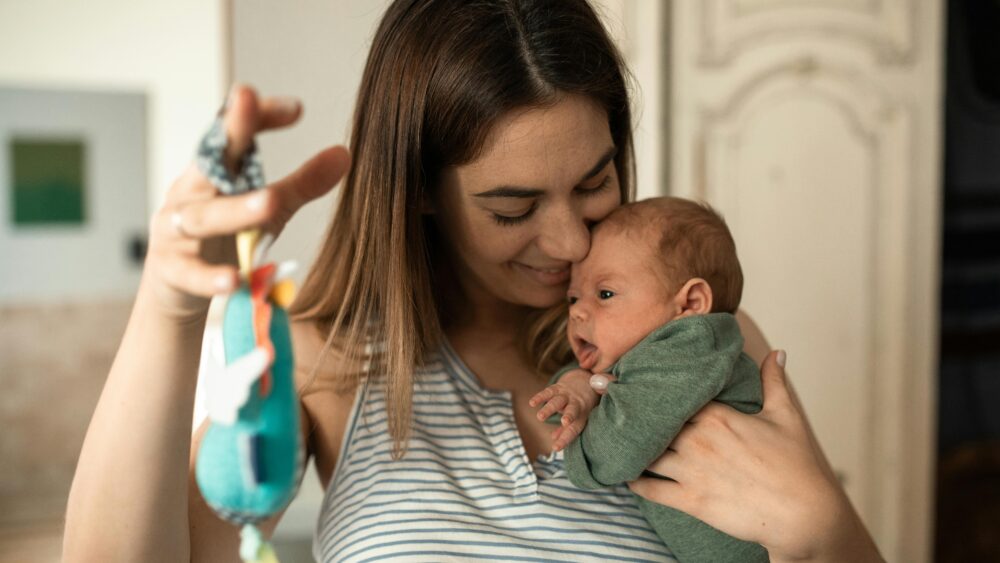
There is a tiny, funny heartbreak in early parenthood: you do everything for this little person, then stare at their face wondering, “Do you actually know it’s me?” Not in a poetic way. In a very real, 3 a.m., spit-up-on-your-shirt kind of way.
The reassuring answer is yes, your baby starts recognizing you very early, but not all at once. A newborn may know mom by scent, voice, rhythm, and touch before they can clearly recognize her face. Visual recognition comes later, because newborn eyesight is still blurry and close-range.
Here’s how baby recognition usually unfolds, and what those little signs actually look like.
So, When Does a Baby Recognize Their Mom?
A baby can recognize their mom in some ways from birth, especially through smell, voice, and touch. Clearer face recognition usually develops around 2 to 3 months, and by 6 months, many babies show a much stronger, more obvious preference for familiar caregivers.
That does not mean every baby reacts dramatically. Some babies light up when mom walks in. Some stare quietly. Some save their biggest reactions for feeding, cuddling, or bedtime. Babies have personalities from the beginning, which is both charming and mildly inconvenient when you are trying to decode them.
At Birth: Mom Is Familiar by Voice, Smell, and Touch
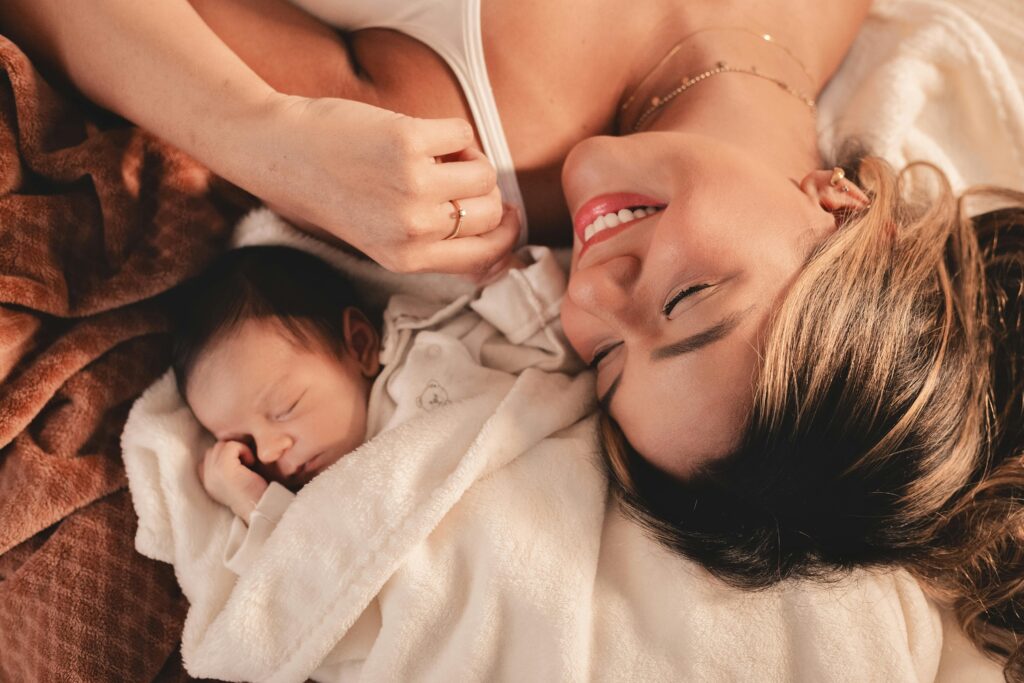
Newborns arrive with fuzzy vision, but their other senses are already working hard. Your baby has heard your voice from inside the womb, especially the rhythm and tone of it. After birth, that familiar sound can be calming even when your baby does not yet understand words.
Your scent matters too. Babies are surprisingly tuned in to smell, especially the scent of their mother and milk. This is one reason a newborn may settle against mom’s chest or turn toward the breast during feeding.
Signs your newborn may recognize mom include:
- Calming when held by mom
- Turning toward mom’s voice
- Settling during skin-to-skin contact
- Rooting or becoming alert near mom’s body
- Relaxing when they hear familiar speech, humming, or singing
I think this stage is easy to underestimate because it does not always look like “recognition” in the adult sense. Your baby is not thinking, “Ah, there’s Mom.” It is more like, “This sound, this smell, this heartbeat, this warmth. I know this.”
1 to 2 Months: Baby Starts Connecting Your Voice and Face
During the first couple of months, babies begin spending more time awake and alert. They still see best up close, so the classic feeding distance is perfect for face-watching. This is when your baby may start studying your face like it is the most interesting painting in the room.
At this age, recognition is still uneven. Your baby may respond to your voice one day and seem completely unimpressed the next. That is normal. Their brain is busy building connections.
Signs around 1 to 2 months may include:
- Staring longer at your face
- Quieting when you speak
- Moving their eyes toward your voice
- Looking calmer in familiar arms
- Beginning to copy simple facial expressions
A small tip: exaggerating your expressions is not silly. Babies love contrast, movement, and rhythm. A slow smile, raised eyebrows, and gentle talking can hold their attention better than a perfectly normal adult face.
Around 2 to 3 Months: Face Recognition Becomes Clearer
This is the stage many parents are waiting for. Around 2 to 3 months, babies often become better at recognizing familiar faces, especially the people they see every day.
You may notice your baby looking directly at you, smiling more socially, or becoming excited when you lean over the crib. This is usually when “Does my baby know me?” starts to feel less like a question and more like a sweet little yes.
Common signs include:
- Smiling when mom appears
- Watching mom move across a short distance
- Looking longer at mom than at unfamiliar faces
- Becoming animated when mom talks
- Relaxing more quickly with mom than with someone new
Fair warning: some babies are subtle. A quiet baby may recognize you beautifully and still not perform big movie-scene reactions. Recognition does not always come with squeals and gummy smiles.
Around 3 to 4 Months: Baby May Show a Stronger Preference
By 3 to 4 months, many babies are more socially awake. They may smile, coo, kick, wiggle, or brighten when mom comes close. Their vision is improving, their memory is growing, and they are starting to connect your face, smell, voice, and caregiving patterns into one familiar person.
This is also when babies may begin enjoying little routines. The song before a nap. The way mom says their name. The silly face during diaper changes. These repeated moments teach the baby, “This person is safe. This person comes back. This person belongs to me.”
Signs at this stage may include:
- Smiling before you even pick them up
- Cooing in response to your voice
- Looking for you when they hear you nearby
- Settling faster with you after crying
- Getting excited during familiar routines
This is one of my favorite stages because recognition starts to feel mutual. You are not just caring for a newborn anymore. You are building a tiny relationship with someone who is beginning to answer back.
Around 4 to 6 Months: Recognition Becomes More Social
Between 4 and 6 months, babies often become much more expressive. They may laugh, reach, babble, or show excitement when mom enters the room. They may also start reacting differently to familiar people and strangers.
At this point, your baby is not just recognizing your face. They are learning your patterns. They know how you hold them, how you sound when you are happy, and what usually happens when you appear.
Signs around 4 to 6 months may include:
- Reaching toward mom
- Laughing or kicking when mom talks
- Watching mom leave or enter a room
- Responding differently to familiar and unfamiliar people
- Showing comfort in mom’s arms during new situations
Some babies become little social butterflies at this age. Others are more cautious. Both can be perfectly normal.
Around 6 to 9 Months: Mom Becomes a “Safe Base”
By 6 to 9 months, many babies have a much stronger sense of familiar people. This is when separation anxiety and stranger anxiety may start showing up. It can be exhausting, but it is also a sign that your baby understands something important: mom is different from other people.
Your baby may cry when you leave, reach for you when someone else holds them, or look back at you when exploring. That last one is especially sweet. It is the baby version of checking, “Are you still there?”
Signs around 6 to 9 months may include:
- Reaching for mom over other people
- Crying when mom leaves the room
- Looking for mom when upset
- Showing hesitation around strangers
- Using mom as comfort in unfamiliar places
This phase can feel intense. It does not mean you spoiled your baby. It usually means attachment is doing exactly what it is supposed to do.
How Babies Recognize Mom: The Senses Working Together
Baby recognition is not one single skill. It is a mix of several senses coming together over time.
Voice
Your voice is one of the earliest ways your baby knows you. Babies hear sound before birth, so the rhythm of mom’s voice can feel familiar right away. Soft talking, singing, reading, and narrating little moments all help build that connection.
Scent
Scent is powerful in the newborn stage. Your baby may recognize the smell of your skin, milk, or clothing. This is one reason some babies settle with a shirt or blanket that smells like mom, as long as safe sleep rules are followed.
Face
Face recognition takes longer because newborn vision is still developing. Babies see best up close at first, which is why cuddling, feeding, and face-to-face talking are so important.
Touch
The way you hold, rock, pat, and comfort your baby becomes familiar. Babies learn through repetition. The same arms, the same rhythm, the same gentle pressure can all become part of how they know you.
Routine
This one gets overlooked, but it matters. Babies recognize patterns before they understand explanations. A bedtime song, feeding position, morning cuddle, or diaper-change phrase can all become familiar cues.
Signs Your Baby Knows You
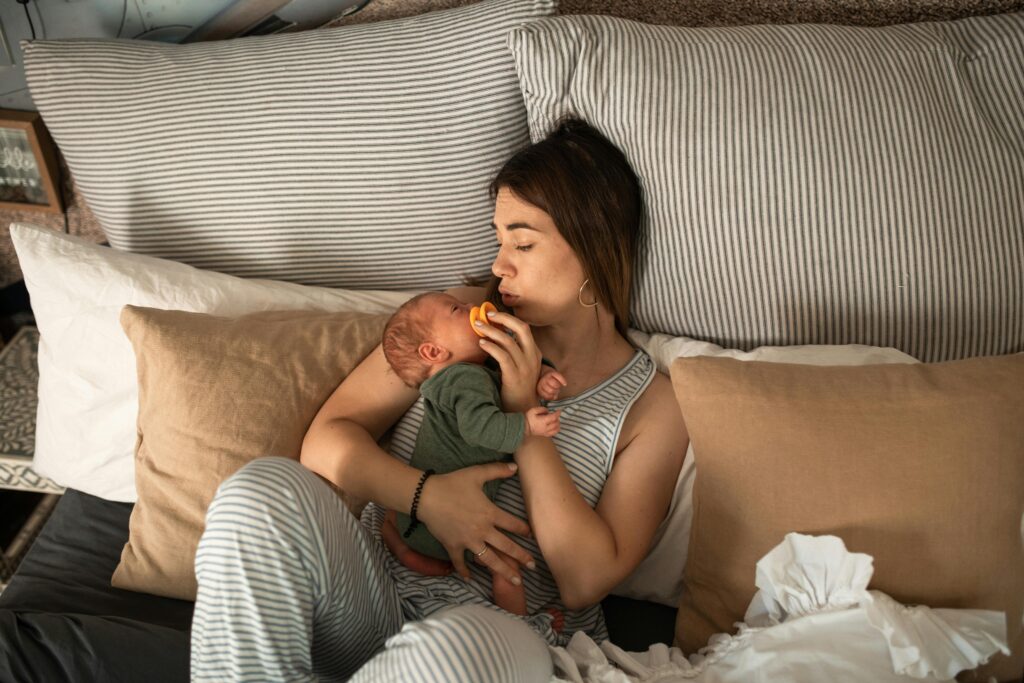
You may not get one big obvious moment. Recognition often shows up in tiny behaviors.
Look for signs like:
- Your baby calms faster with you
- They stare at your face longer
- They turn toward your voice
- They smile when you come close
- They seem more relaxed in your arms
- They show excitement during familiar routines
- They reach for you as they get older
- They cry or fuss when you leave during the separation-anxiety stage
A baby recognizing mom does not always mean they stop crying instantly. Sometimes they cry harder with the person they trust most because they feel safe enough to let it all out. Annoying? Yes. Meaningful? Also yes.
What If My Baby Does Not Seem to Recognize Me Yet?
Try not to judge recognition by one moment. A tired, hungry, overstimulated, or gassy baby may not respond the way you expect. Development also varies from baby to baby.
That said, it is worth mentioning concerns to your pediatrician if your baby:
- Does not respond to loud sounds
- Rarely seems alert to faces or voices by a few months old
- Does not make eye contact or smile socially by around 3 months
- Does not turn toward sounds as expected
- Seems unusually floppy, stiff, or disconnected
- Has lost skills they previously had
This does not mean something is definitely wrong. It simply means your pediatrician can check hearing, vision, and development so you are not left guessing.
Simple Ways to Help Your Baby Recognize and Bond With You
You do not need fancy baby gear for this. Most recognition-building happens through ordinary, repeated care.
Try:
- Talking during diaper changes
- Singing the same little song before sleep
- Holding your baby close enough to see your face
- Using their name often in a warm voice
- Making slow, playful facial expressions
- Doing skin-to-skin when it feels comfortable
- Keeping a few predictable routines
- Letting other caregivers bond too, so baby feels safe with more than one loving person
The best part is that none of this has to be perfect. Babies learn through repetition, not performance.
Do Breastfed Babies Recognize Mom Earlier?
Breastfeeding can give babies extra scent, taste, closeness, and routine cues, so some breastfed babies may show strong recognition of mom very early. But bottle-fed babies also recognize and bond deeply with their mothers and caregivers.
Recognition is not a prize earned by one feeding method. It grows through closeness, response, comfort, and repetition.
Do Babies Recognize Dad or Other Caregivers Too?
Yes. Babies can recognize dads, grandparents, siblings, and other regular caregivers too, especially when those people talk, hold, feed, soothe, and play with them often.
Mom may have an early advantage because of pregnancy, scent, and feeding for some babies, but babies are built to bond with the people who consistently care for them. A dad who sings the same song every night or a grandparent who handles morning cuddles can become deeply familiar too.
The Part Parents Usually Need to Hear
Your baby probably knows you earlier than they can show you.
They may know you in the smell of your shirt, the rhythm of your voice, the way your hand rests on their back, or the particular bounce you do when nothing else works. Face recognition gets clearer with time, but the bond starts before your baby can smile on cue or reach for you dramatically.
So if you are holding a newborn and wondering whether all this love is landing somewhere, it is. Quietly at first. Then one day, usually when you are least prepared for it, they look at you like you are their whole little world.

- Korean Cat Names I’d Pick for a Cute New Kitten - July 2, 2026
- Classic Girl Names Parents Still Love Today - June 30, 2026
- Cute Baby Girl Names I Would Tell My Best Friend About - June 29, 2026