There is a funny little moment in early parenthood when you realize your baby has stared deeply at the ceiling fan, the curtains, and one random lamp, but you are still not sure whether they know you are their actual parent.
It is a fair question. Newborns are tiny mysteries. They can be soothed by you one minute and look completely unimpressed the next.
So, When Does a Baby Recognize Their Parents?
Babies begin recognizing their parents from birth through familiar sounds, smells, touch, and caregiving patterns. Visual recognition of parents becomes clearer around 2 to 3 months, and parent preference often becomes much easier to notice around 4 to 6 months.
A simple timeline looks like this:
- Birth: Baby may recognize parents by voice, scent, touch, and feeding routines.
- 1 to 2 months: Baby starts watching faces more closely and responding to familiar voices.
- 2 to 3 months: Baby may recognize familiar faces more clearly.
- 3 to 4 months: Baby connects faces, voices, and routines.
- 4 to 6 months: Baby may show obvious excitement or preference for parents.
- 6 to 9 months: Baby may show stranger anxiety or separation anxiety.
- 9 to 12 months: Baby usually recognizes familiar people more consistently.
The important thing to remember is that recognition is not one single milestone. It builds slowly, like a little mental scrapbook of your voice, smell, face, touch, and daily care.
From Birth: Your Baby Knows More Than You Think
At birth, babies do not see the world clearly yet. Their vision is still developing, and faces look best up close. But their hearing and smell are already doing a lot of work.
A newborn may recognize parents through:
- A familiar voice
- A familiar scent
- Skin-to-skin contact
- The rhythm of being rocked
- Feeding routines
- A parent’s heartbeat or breathing
- The way a caregiver holds them
Mom often has an early advantage because the baby has heard her voice during pregnancy and may recognize her scent soon after birth. But dads, partners, adoptive parents, grandparents, and other caregivers can also become familiar through repeated closeness.
This stage is easy to miss because it does not look like a big “I know you!” moment. It may look like a baby calming a little faster in your arms, turning toward your voice, or settling against your chest.
Tiny signs count.
1 to 2 Months: Baby Starts Studying Familiar Faces
Around 1 to 2 months, babies spend more time awake and alert. They may stare at faces for longer stretches, especially when a parent is close during feeding, cuddling, or diaper changes.
At this age, your baby may:
- Look at your face for longer
- Turn toward your voice
- Calm when you talk
- Watch your mouth while you speak
- Relax in familiar arms
- Respond to repeated songs or phrases
This is also the age when parents sometimes feel unsure. One day your baby seems locked onto your face. The next day, they are fascinated by a shadow on the wall.
That does not mean your baby forgot you. Babies are learning everything at once. Your face is important, but so is light, movement, sound, hunger, gas, and that wildly interesting ceiling fan.
2 to 3 Months: Parent Face Recognition Gets Clearer
Around 2 to 3 months, many babies start recognizing familiar faces more clearly. This is often when parents notice real social smiles, longer eye contact, and a more alert reaction when a familiar person comes close.
Your baby may:
- Smile when you lean over the crib
- Follow your face with their eyes
- Brighten when you speak
- Seem calmer with familiar caregivers
- Watch you move nearby
- Smile at repeated games or expressions
This is one of the sweetest stages because recognition starts to feel mutual. You are not just caring for a newborn anymore. You are slowly becoming a known person in your baby’s little world.
I think this is also when parents start getting emotionally paid back a bit. Not fully, of course. Sleep is still a distant dream. But that first real smile can do a lot.
3 to 4 Months: Baby Connects Your Face, Voice, and Routine
By 3 to 4 months, babies are usually better at connecting different cues. They are not just noticing a face or a voice separately. They are learning that this face, this voice, this smell, and this way of being held all belong together.
That is parent recognition becoming richer.
Your baby may begin to recognize:
- The parent who sings before bedtime
- The caregiver who does bath time
- The voice that usually means feeding
- The arms that rock them a certain way
- The face that appears after naps
Signs around this age may include:
- Cooing back at a parent
- Kicking or wiggling when a parent appears
- Smiling before being picked up
- Looking around when they hear a parent nearby
- Settling into a familiar hold
If one parent gets bigger reactions than the other, try not to turn it into a competition. Babies respond to patterns. The person doing more feeding, soothing, or daily routines may become easier for the baby to predict at first.
That can change.
4 to 6 Months: Recognition Becomes Much More Obvious
Between 4 and 6 months, many babies become more expressive. They may laugh, reach, babble, kick, or smile widely when a parent walks into view.
At this stage, babies often recognize parents and frequent caregivers well. They may also begin acting differently around people they do not see as often.
You might notice:
- Big smiles for familiar people
- Reaching arms upward
- Laughing during repeated games
- Turning toward a parent’s voice across the room
- Looking more relaxed with regular caregivers
- Becoming hesitant with unfamiliar faces
This is a good age to build simple family rituals. A morning window walk, a bedtime song, a silly diaper-change phrase, or a special cuddle routine can all help your baby recognize different caregivers.
I like when each parent has their own little thing. Dad does the bath song. Mom does the nap phrase. Grandma does the hand game. Babies love patterns more than we give them credit for.
6 to 9 Months: Baby Knows Who Their People Are
Around 6 to 9 months, many babies show stronger attachment to familiar caregivers. This is often when stranger anxiety or separation anxiety begins.
This can look like:
- Crying when a parent leaves the room
- Reaching for mom, dad, or a regular caregiver
- Hesitating around strangers
- Looking back at a parent while exploring
- Clinging in unfamiliar places
- Relaxing when a parent returns
This stage can be both touching and exhausting. A baby who suddenly cries when you hand them to someone else is not being rude. They are old enough to know the difference between familiar and unfamiliar people.
That is a big developmental step.
9 to 12 Months: Recognition Is Usually Consistent
By 9 to 12 months, most babies recognize parents and regular caregivers clearly. They may crawl toward you, reach to be picked up, wave, smile when they hear your voice, or look for you after a short separation.
At this age, babies may also have strong opinions about who does what.
They may associate:
- One parent with feeding
- One parent with play
- One caregiver with naps
- A sibling with excitement
- A grandparent with a familiar game
This is not random. Your baby is building memory through repeated emotional experiences.
Do Babies Recognize Mom First?
Often, yes. Babies may recognize mom very early because they have heard her voice before birth and may be familiar with her scent soon after birth. Feeding, skin-to-skin contact, and frequent closeness can make that recognition stronger.
But this does not mean mom is the only person a baby can recognize early.
Babies bond with the people who care for them consistently. A dad who handles night feeds, a grandparent who visits daily, or an adoptive parent who provides regular comfort can become deeply familiar too.
Recognition is not about biology alone. It is also about repetition, warmth, and care.
When Do Babies Recognize Dad?
Babies can become familiar with dad’s voice early, especially if he talked to the baby often during pregnancy or spends regular time holding, feeding, and soothing after birth.
Clearer recognition of dad often becomes noticeable around 2 to 4 months, then stronger around 4 to 6 months with regular interaction.
Signs baby recognizes dad may include:
- Turning toward dad’s voice
- Smiling during a familiar game
- Calming in dad’s arms
- Looking for dad when he speaks
- Getting excited during dad’s usual routine
Fair warning for dads: some babies seem to prefer the person who feeds or soothes them most often at first. That is not rejection. That is baby logic. More time and repeated care usually make a big difference.
When Do Babies Recognize Grandparents and Other Caregivers?
Babies recognize people they see often earlier than people they see once in a while. A grandparent who visits daily may become familiar much sooner than an aunt, uncle, or friend who visits occasionally.
A rough guide:
- Daily caregivers: may become familiar within the first few months
- Weekly visitors: may become familiar later, especially with repeated holding and play
- Occasional visitors: may need more time, especially once stranger anxiety starts
If your baby cries when a relative holds them, it does not mean the relative has done anything wrong. It may simply mean your baby is sorting people into “my usual people” and “not my usual people.”
That is normal, even if Grandma takes it personally.
How Babies Recognize Parents Through Their Senses
Voice
Voice is one of the earliest recognition tools. Babies notice tone, rhythm, and repetition long before they understand words.
Talking, singing, reading, and narrating simple things can help your baby connect your voice with comfort.
Scent
Scent is powerful in the newborn stage. Babies may recognize the smell of a parent’s skin, milk, or clothing.
This is one reason a baby may settle against a familiar caregiver even before they can clearly recognize a face.
Face
Face recognition takes longer because newborn vision is still developing. Babies see best up close at first, then gradually become better at recognizing familiar faces from farther away.
Face-to-face moments during feeding, cuddling, and play all help.
Touch
Babies learn the feel of familiar arms. The way you hold, pat, bounce, rock, or rub their back becomes part of how they know you.
You may not think your “bounce and sway” is special, but your baby might.
Routine
Routine is underrated. Babies recognize patterns before they understand words.
A bedtime song, a feeding position, a morning cuddle, or a silly phrase can become a strong cue that says, “This is my person.”
Signs Your Baby Recognizes You
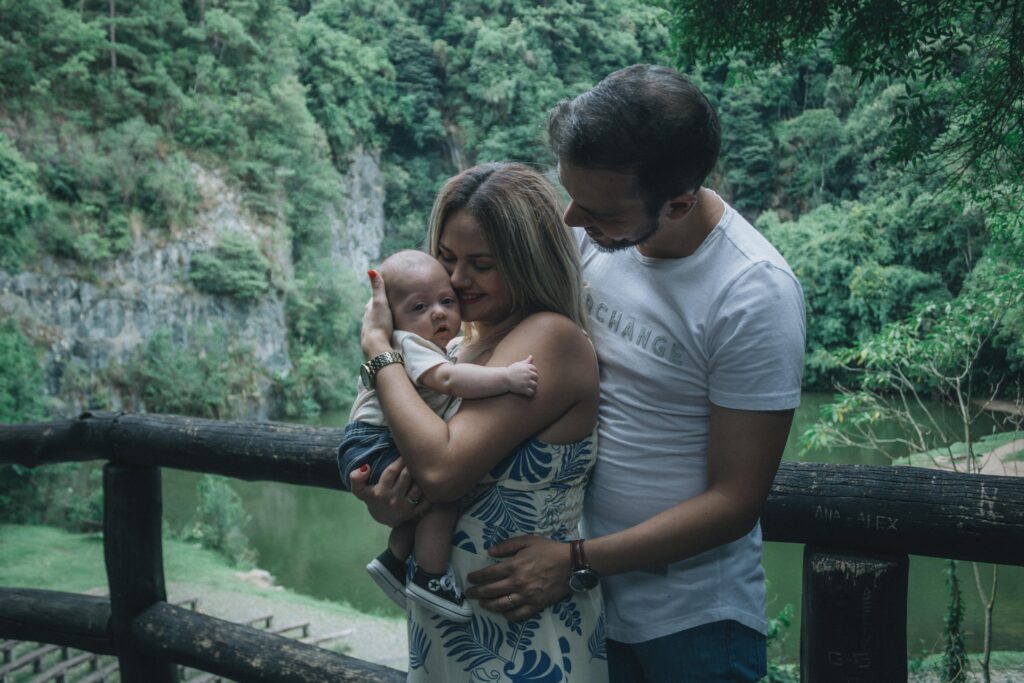
Your baby may recognize you if they:
- Calm when you hold them
- Turn toward your voice
- Stare at your face
- Smile when you come close
- Coo or wiggle when you talk
- Reach for you
- Relax during familiar routines
- Cry when you leave
- Prefer you when tired or upset
- Look for you in a new place
Some babies show recognition loudly. Others show it in quiet little ways. A calm body, a longer stare, or a tiny turn toward your voice still matters.
What If My Baby Does Not Seem to Recognize Their Parents?
Try not to judge recognition from one tired, fussy, overstimulated moment. Babies can seem distant when they are hungry, sleepy, uncomfortable, sick, or simply busy watching the world.
Still, it is worth bringing up concerns with a pediatrician if your baby:
- Does not respond to sound
- Rarely makes eye contact by a few months old
- Does not smile socially around 3 months
- Does not seem interested in faces
- Does not turn toward voices as expected
- Seems unusually floppy, stiff, or disconnected
- Loses skills they previously had
Asking does not mean you are panicking. It means you are paying attention.
Simple Ways to Help Your Baby Recognize and Bond With You
You do not need a complicated bonding plan. Babies learn through repeated, loving care.
Try:
- Saying your baby’s name often
- Talking during diaper changes
- Singing the same short song before sleep
- Holding your face close during calm moments
- Making slow, playful expressions
- Doing skin-to-skin when comfortable
- Letting each caregiver have a special routine
- Responding when your baby cries
- Repeating small rituals every day
The point is not to perform parenthood perfectly. It is to become familiar.
The Part Parents Usually Need to Hear
Your baby may know you long before they can show it in a way that feels obvious.
They may know you by the sound of your voice from the hallway. By the smell of your shirt. By the way you pick them up. By the song you keep singing even though you only remember half the words.
Recognition starts quietly. Then, one day, your baby sees you and smiles like you are the exact person they were waiting for.