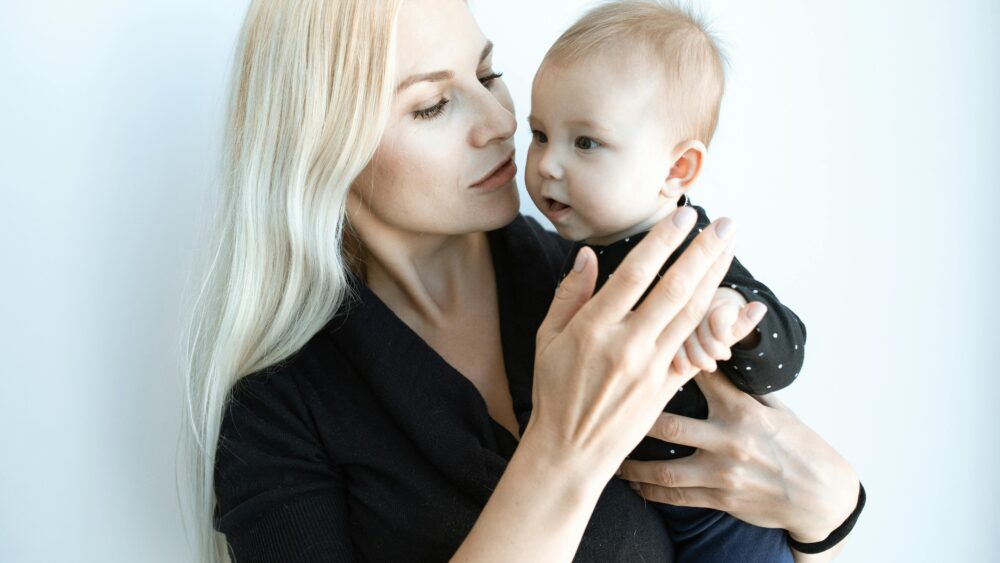
The first time a baby turns toward their name feels oddly huge. You say “Maya?” or “Leo?” from across the room, and for half a second it seems like they know exactly who they are. Then they go back to chewing a sock, because they are still a baby and dignity has not entered the chat.
Most babies begin noticing the sound of their name sometime around 4 to 6 months, especially if they hear it often. A more reliable response, like turning their head, looking at your face, smiling, or pausing when you call them, usually becomes clearer between 6 and 9 months. By around 9 months, many babies respond more consistently when their name is said.
That said, babies are not tiny machines. Hunger, tiredness, teething, a noisy room, or a very interesting spoon can all make them ignore you. One missed response does not mean much. A pattern matters more.
So, When Do Babies Recognize Their Name?
Most babies recognize and respond to their name sometime between 6 and 9 months.
Some babies show early signs around 4 to 5 months, but at that age, it may be more about recognizing a familiar sound than fully understanding, “That word means me.”
A simple way to think about it:
- 0 to 3 months: Baby knows voices and tones more than words.
- 4 to 5 months: Baby may notice familiar sound patterns, including their name.
- 6 to 9 months: Baby may start turning, smiling, pausing, or looking when called.
- 9 to 12 months: Response usually becomes more consistent.
- Around 12 months: If a baby rarely or never responds to their name, it is worth discussing with a pediatrician.
What Name Recognition Actually Looks Like
A baby recognizing their name does not usually look like a dramatic movie moment. It is more ordinary than that.
You might notice your baby:
- Turns their head when you say their name
- Looks toward your voice
- Pauses what they are doing
- Smiles when you call them
- Makes eye contact after hearing their name
- Gets excited because they expect attention
- Crawls or wiggles toward you
- Responds more to their name than to random words
A baby may not respond every single time. Honestly, even adults do not do that. The goal is not perfection. It is a growing pattern of awareness.
Name Recognition by Age
Newborn to 3 Months: Voice Comes First
At this stage, babies are soaking in voices, rhythm, warmth, and tone. They may calm when they hear a parent or caregiver, but they are not usually recognizing their name as a personal label yet.
This is still an important stage. A baby hears their name folded into everyday life:
“Good morning, Elias.”
“Hi, Nia.”
“Let’s change your diaper, Mateo.”
Those little moments matter. They are not lessons. They are just the sound of belonging.
4 to 5 Months: The Name Starts Sounding Familiar
Around 4 to 5 months, some babies begin to notice familiar sound patterns. Their own name may stand out because they hear it so often.
This does not mean they understand names the way adults do. A baby named Sofia may not think, “Ah yes, that is my identity.” But Sofia may hear that soft, repeated sound and perk up because it has become familiar.
Short, clear names can be especially easy to notice at this age. Names like Leo, Milo, Ari, Ella, Nora, and Kai have bright, simple sounds. Longer names still work beautifully, but babies may first latch onto a nickname or repeated sound.
For example:
- Sebastian may become Seb or Bash
- Isabella may become Bella
- Theodore may become Theo
- Amelia may become Mia or Millie
That is not a problem. Nicknames are part of how families speak.
6 to 9 Months: Responses Become More Noticeable
This is the age range many parents are really asking about. Between 6 and 9 months, babies often begin responding more clearly when their name is called.
You might say “Arjun!” and see your baby turn toward you. You might say “Mila!” and get a smile. You might call “Jack!” and watch him pause mid-crawl, then immediately continue toward the forbidden TV remote.
Very normal.
At this age, babies are also becoming more social. They may enjoy back-and-forth sounds, facial expressions, clapping, babbling, and little games. Their name becomes part of that social world.
A nice, low-pressure habit is to use the name before something warm or interesting:
“Luca, look at this!”
“Zara, here’s your bear.”
“Ezra, Daddy’s back.”
“Anaya, bath time.”
The name starts to mean, “Someone is talking to me.”
9 to 12 Months: Recognition Gets More Consistent
By 9 to 12 months, many babies respond to their name more reliably. They may turn even when they are playing, look up from a toy, or crawl toward the person calling them.
This does not mean they will obey instructions. A baby may respond to “Mason!” and still absolutely continue emptying the wipes packet. Name recognition is about attention first, not discipline.
Around this stage, you may also notice your baby understands other familiar words, routines, and tones. They may know words like “milk,” “bye-bye,” “up,” “mama,” “dada,” or the family pet’s name before they can say much themselves.
Understanding usually comes before speaking.
Do Nicknames Confuse Babies?
Not usually, but consistency helps.
Most families use a mix of names, nicknames, and affectionate little nonsense words. A baby named Charlotte may hear:
- Charlotte
- Lottie
- Char
- Baby girl
- Sweet pea
- Tiny potato, because families are weird in the best way
A few nicknames are fine. The only issue is if the baby almost never hears their actual name. If you want your baby to recognize Charlotte, use Charlotte regularly during face-to-face moments.
A good balance looks like this:
“Charlotte, do you want milk?”
“Hi, Lottie.”
“Charlotte, look at Mama.”
“There’s my sweet girl.”
You do not need to ban nicknames. Just let the real name get enough airtime.
Are Some Names Easier for Babies to Recognize?
Maybe in a practical sense, yes. Babies hear rhythm, stress, and repeated sounds before they understand names as identity labels.
Names with clear sounds may be easier to pick out:
- Leo: LEE-oh
- Maya: MY-uh
- Nora: NOR-uh
- Theo: THEE-oh
- Ari: AH-ree
- Luna: LOO-nuh
- Milo: MY-loh
- Ava: AY-vuh
Longer names are not a problem, though. A baby named Alexander may first notice Alex. A baby named Valentina may respond more quickly to Val or Tina if the family uses those often.
The sound that matters most is the one your baby hears consistently.
What If Your Baby Has a Long Name?
Long names are not harder in any serious way, but parents often naturally shorten them during babyhood.
For example:
- Evangeline may become Evie
- Nathaniel may become Nate
- Francesca may become Frankie
- Maximilian may become Max
- Aurelia may become Ria
- Christopher may become Kit
I actually like this about long names. They give a child room to grow. A baby may be Theo at home and Theodore on paper. A toddler may be Maddie before growing into Madeleine later.
For recognition, just be aware of what you use most. If everyone says Evie 95 percent of the time, do not be surprised if she responds to Evie before Evangeline.
What If Your Baby Responds to a Nickname but Not Their Full Name?
That is usually understandable.
If your baby hears Benji all day and Benjamin only at the doctor’s office, Benji is the familiar sound. The full name may come later.
You can gently connect the two:
“Benjamin. Benji. Hi, Benji.”
“Good morning, Amelia. Hi, Mia.”
“Where’s Theodore? There’s Theo.”
No quiz. No pressure. Just repetition.
How to Help Your Baby Recognize Their Name
Use the Name During Warm Moments
Names work best when they are tied to connection, not correction.
Try using your baby’s name during:
- Feeding
- Cuddles
- Diaper changes
- Bath time
- Peekaboo
- Reading
- Getting dressed
- Looking in the mirror
“Sam, ready for your book?” feels much better than only hearing “Sam!” when he is grabbing someone’s glasses.
Say It Clearly, Not Constantly
You do not need to repeat your baby’s name twenty times in a row. That can turn into background noise.
Instead, say it clearly, then pause:
“Amara?”
Wait a second.
If she looks, smile or respond warmly.
“Hi, Amara.”
That tiny back-and-forth is more useful than drilling.
Pair the Name With Eye Contact
Face-to-face moments help babies connect sound, expression, and attention.
Try:
“Ravi, look.”
“Hi, Isla.”
“Mateo, here’s your cup.”
Use a warm voice. Babies are very tuned into tone.
Use Their Real Name Alongside Nicknames
Nicknames are sweet, but sprinkle the actual name into the day too.
Instead of only “bubba,” try:
“Good morning, Ezra.”
“Ezra, do you want up?”
“There’s my bubba.”
This gives your baby both the official name and the affectionate family language.
Read Books With Their Name Added
You can casually insert your baby’s name into board books.
“Where is the bear, Nora?”
“Leo sees the moon.”
“Can Maya find the dog?”
It feels silly at first. Babies love silly.
Let Siblings and Grandparents Use the Name Too
Babies learn from repeated voices and routines. If older siblings, grandparents, or caregivers use the baby’s name naturally, that helps the sound become familiar in different contexts.
Just keep it gentle. No one needs to stand over the baby calling their name like a hearing test.
When Should Parents Be Concerned?
Bring it up with your pediatrician if your baby is close to 12 months and rarely or never responds to their name, especially if you also notice other concerns such as:
- Limited eye contact
- Little interest in social games
- Not turning toward familiar voices
- No babbling or very little sound-making
- Not responding to everyday sounds
- Loss of skills they had before
- Not using gestures like reaching, waving, or showing interest
This does not mean something is definitely wrong. Sometimes babies are focused, tired, temperamentally chill, or dealing with hearing issues that can be checked. But it is worth asking. A pediatrician can look at the whole picture, including hearing, communication, social development, and family history.
I would not panic over a 7-month-old who responds sometimes and ignores you other times. I would pay attention to a baby nearing 12 months who almost never reacts to their name in calm, quiet moments.
Quick At-Home Check
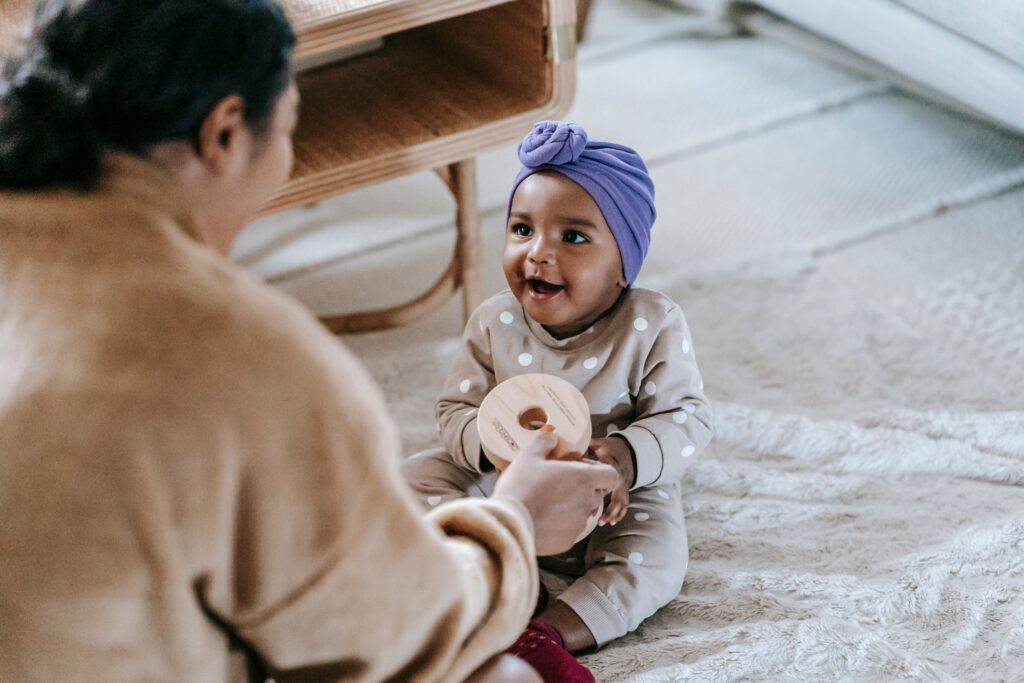
This is not a diagnosis or a formal test, just a gentle way to observe.
Pick a time when your baby is rested and not hungry. Sit a short distance away while they are playing safely. Say their name once in a normal, warm voice.
Notice what happens:
- Do they pause?
- Do they turn?
- Do they look toward your voice?
- Do they smile?
- Do they respond more to your voice than to a random sound?
Try again another day. Patterns over time are more useful than one moment.
Also, avoid testing only when the TV is on, siblings are loud, or the baby is deeply focused on a toy. Even a baby who knows their name may ignore you when the stacking cups are having a major moment.
Name Recognition and Hearing
Sometimes a baby not responding to their name has less to do with the name and more to do with hearing.
A baby may still react to some sounds but miss softer speech. Ear infections, fluid in the ears, or hearing differences can affect how clearly they hear voices.
Mention it to your pediatrician if your baby:
- Does not startle at loud sounds
- Does not turn toward voices or noises
- Does not seem comforted by familiar voices
- Has frequent ear infections
- Suddenly responds less than before
Again, this is not about assuming the worst. It is about checking the simple things early.
Does a Baby Know Their Name Before They Can Say It?
Yes, often.
Babies usually understand some words before they can say them. A baby may recognize Milo months before they can say “Milo.” They may respond to “mama,” “milk,” or “up” before speaking clearly.
Saying their own name is a much later skill. Many toddlers do not say their own name clearly until well after their first birthday, and saying a full name usually comes later still.
So if your baby turns toward “Sienna” but cannot say it, that is completely expected.
What About Bilingual or Multilingual Homes?
Babies in bilingual homes can still recognize their names. In fact, a name may be one of the most consistent words they hear across languages.
A baby might hear:
“Rohan, come here.”
“Rohan, idhar aao.”
“Rohan, mira esto.”
“Rohan, regarde.”
The surrounding language changes, but the name stays familiar.
Pronunciation can vary slightly between accents and languages, and that is okay. Babies are remarkably good at learning the sound patterns of their own home.
If a name has different pronunciations in different languages, families may choose one main home pronunciation or accept both. For example:
- Rafael may be rah-fah-EL or RAF-ee-el
- Maya may be MY-uh or MAH-yah
- Anika may be AH-nih-kuh or uh-NEE-kuh
- Leo may be LEE-oh in English or closer to LEH-oh in some languages
The baby will learn what the family uses.
A Name-Lover’s Note on Sound
Some names are just fun to say to a baby. Milo bounces. Nora is soft and clear. Kai is quick as a clap. Elio feels sunny. Zara has sparkle. Theo sounds like a smile.
Does that mean you should choose a baby name only because it is easy for a 7-month-old to recognize? No. Please do not let one milestone boss around the whole naming process.
But sound does matter in daily life. A name is not just written on forms. It is whispered at 2 a.m., sung during bath time, called from the kitchen, and repeated in a hundred tiny ways before a child ever learns to spell it.
That is why I have a soft spot for names that feel good in real voices, not just on a list.